Reading roomFields of study
What brings a working group together?
An art historian and a researcher working on political memory might read the same image. Their questions determine which evidence they put beside it.
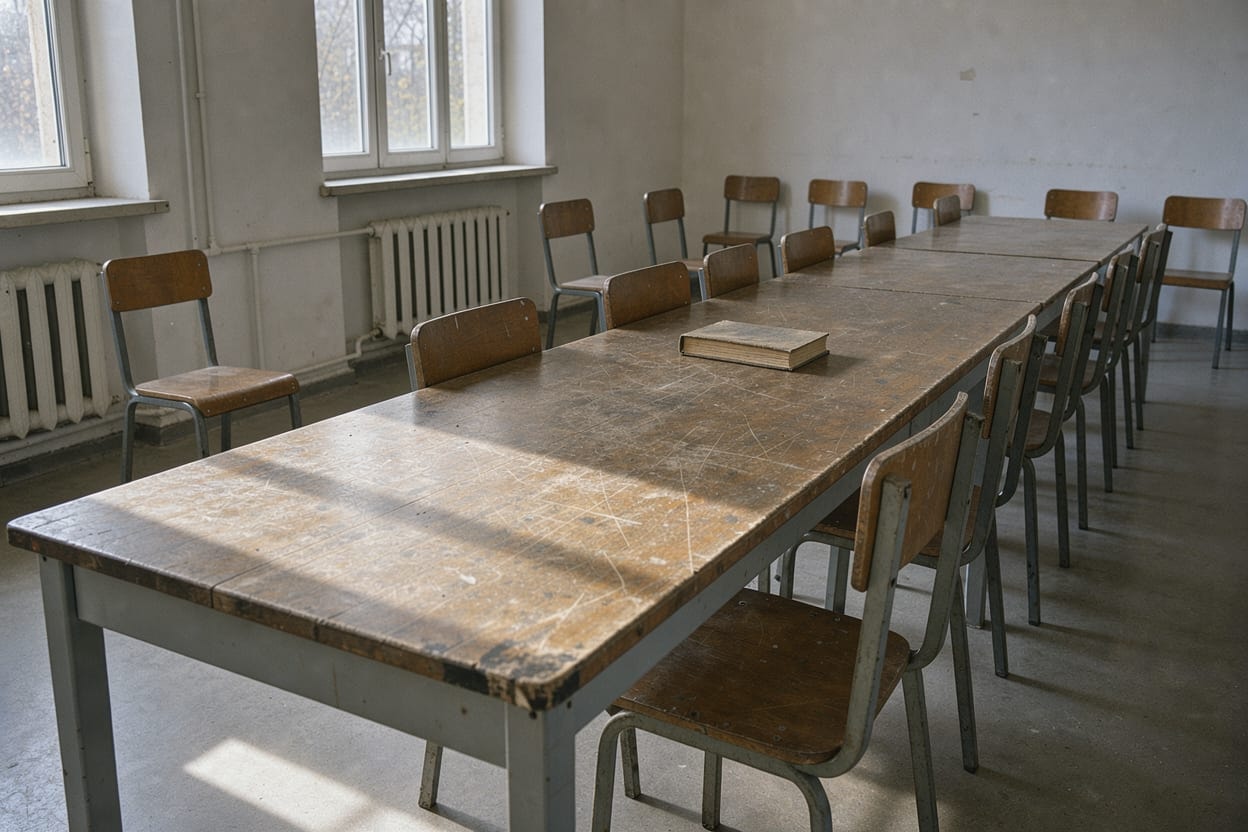
Different questions for the same piece of evidence
Take a photograph of a Bucharest street. An architectural historian may ask who designed a building. A historian of commerce may notice what the shopfront displays. A researcher studying political memory will want to know whether the street had a different name when the photograph was taken. A working group gives people time to ask such questions of one another before a piece of research is finished.
The society organised thematic working groups to bring colleagues in different countries and at different career stages into regular discussion. Its activities included seminars, book launches, work-in-progress meetings and themed panels at its congresses. Some groups were organised around a period, others around an object, method or discipline.
Time and territory
Before 1918. Participants studied the world of principalities, empires and the making of a kingdom. A 2022 discussion of Darwinism and the politics of science followed the reception of evolutionary ideas in Romania from 1859 to 1918. Before 1918
Interwar history. Cultural and political changes within Greater Romania brought historians of several disciplines into online discussions and book events. A local institution could be studied both through its own rules and through its place in the enlarged state. Between the wars
The Holocaust and the Second World War. The joint group with the PLURAL forum brought military history into the same discussion as the experiences of Jews and Roma under Romanian authority. Its programme included film, the memory of Stalingrad, art made by prisoners and the history of war crimes trials. War and the Holocaust
Postwar politics, history and culture. Collectivisation, everyday life under state socialism and research on the Securitate all require scholars to move between state records and the words of people subject to state power. Law, memory and justice add questions about how those records were used after the regime fell. After 1947
Evidence across disciplines
| Field | One way into the discussion |
|---|---|
| Anthropology and sociology | Put a museum’s description of a March cord beside the account of someone who gives or wears it. |
| Cultural studies, art history and literature | Ask how a poem, performance or exhibition comes to represent a nation, and where the framing leaves out part of the work. |
| Business and economics | A prize essay on cash-and-carry wholesalers asks what happened when new forms of retail reached Romanian customers in the 1990s. |
| Democracy and politics | Compare political parties, the language of a parliamentary debate and the civic associations active outside parliament. |
| International relations and security | Compare Romania and Moldova in institutions that assign the two countries different roles. Ask how the meaning of security changed after state socialism. |
| Gender and minority studies | Look again at who appears in a national account and which experiences travel through diaries, local press or interviews. |
| Religious studies | Follow an image across texts, rituals, political groups and personal accounts. Similar imagery may acquire quite distinct meanings. |
| Graduate and early-career work | Use a reading group to test a small claim against evidence someone else can examine. |
The gender studies group included collaboration with Indiana University Bloomington. Subjects such as law and society, memory and justice, business and economics, minority studies and the experiences of early-career scholars also appeared in the society’s field list. Group headings change more readily than the research questions. The journals and the book shelf provide more lasting routes into this work.