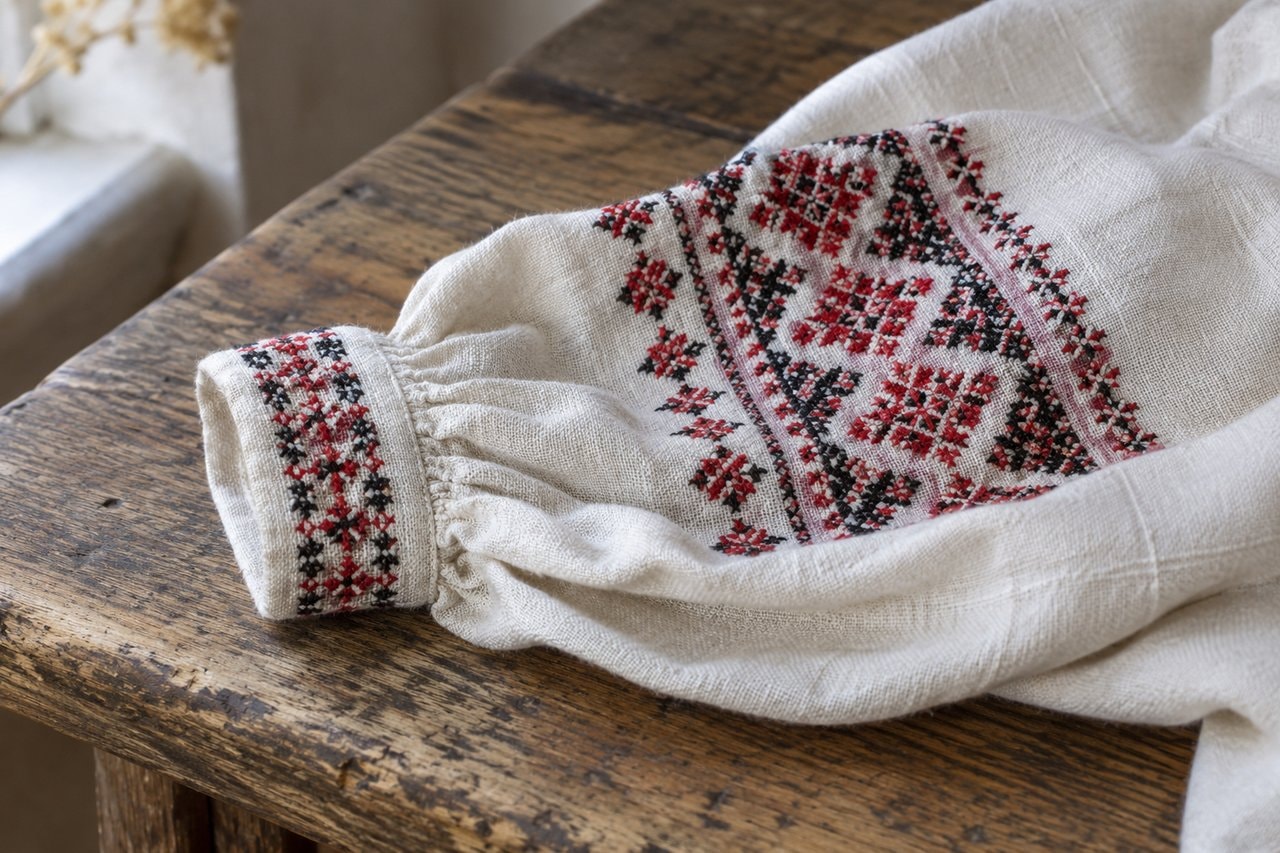
The terms used in a source need their own context. An ethnic designation, the language recorded by a census and a place of birth answer different questions. A reader should preserve the category used by the source and avoid changing it into a broader claim about belonging. The guide to historic regions helps place communities without treating a region as the exclusive home of a particular people.
Romanians and questions of identification
The Wikipedia article on Romanians describes a Romance-speaking people living mainly in Romania and Moldova, with communities in neighbouring countries as well. It also records disagreement over whether Moldovans should be treated as a subgroup of Romanians or as a distinct ethnic group. That disagreement is reported here without deciding how individuals ought to identify.
Shared language and historical connections are useful subjects of study, but they do not settle every question of self-identification. It is possible to describe the category a particular source uses without assuming that everyone accepts it. The introduction to Romanian explains the related distinction between the language itself, its regional varieties and the names used for it.
Hungarians and Székelys
Wikipedia’s article on Hungarians in Romania places much of the Hungarian community in Transylvania and identifies Székely Land as an important area of settlement. It also describes Csángó communities in Moldavia and Hungarian communities elsewhere in Romania. The geographical range matters: a broad ethnic designation includes local histories that should not be collapsed into an identical experience.
The Wikipedia article on the Székelys describes them as a Hungarian subgroup living chiefly in Székely Land. It also records Székely communities connected with Bukovina. The names Hungarian and Székely can therefore be related without carrying precisely the same geographical or historical meaning. When reading a community history, note which designation the source actually uses and whether its subject is a locality, a cultural tradition or an administrative category.
Transylvanian Saxons
Wikipedia’s account of the Transylvanian Saxons describes a German-speaking people with origins in different parts of western Europe, rather than only the area suggested by the name Saxon. It links their history with settlement in Transylvania and with a dialect close to Luxembourgish. The same account describes substantial emigration during and after the Second World War and through the communist and later periods, principally towards Germany.
Their village churches and towns remain important subjects of regional history, but buildings cannot replace the history of people who left or stayed. A church can bear witness to earlier community life while its present surroundings have changed. It is useful to distinguish material survival, demographic change and the continuing cultural work of people connected with the region.
Roma and the history of enslavement
The Wikipedia article on Romani people in Romania identifies the Roma as a substantial ethnic minority and explains why census counts and wider estimates differ. This guide uses the respectful terms Roma and Romani. A description of an ethnic group should not assume an occupation, lifestyle or set of beliefs for every person within it.
According to Wikipedia’s article on slavery in Romania, chattel slavery in Wallachia and Moldavia was abolished in stages during the 1840s and 1850s. Roma were the principal group enslaved, with people held by the state, aristocrats and Orthodox monasteries. Enslaved people worked in agriculture, crafts and domestic service. This was a system of coercion and denied freedom, rather than a colourful detail of rural life.
Abolition and the later lives of Roma belong in the same history, but legal freedom should not be confused with immediate equality. The source records limited success in subsequent efforts at integration. Describing these conditions requires attention to institutions and choices imposed on people, while leaving room for the different histories of particular Roma communities.
Jewish communities
Wikipedia’s history of the Jews in Romania describes a diverse, largely urban community whose history includes disputes over citizenship, religious persecution and antisemitism. It records the Holocaust in Romanian territories and subsequent waves of emigration as major causes of the community’s decline. These are distinct historical processes and should be named clearly, without treating forced destruction and voluntary movement as the same thing.
The guide to the Holocaust gives the wartime history its necessary space. Jewish life should also be understood through community, language, religion and cultural work. A history that discusses only persecution is incomplete; a history that omits persecution misrepresents the conditions in which communities lived.
Lipovans
Wikipedia’s article on the Lipovans identifies ethnic Russian Old Believers with communities in Romania, Moldova and neighbouring countries. It connects their migration with persecution after changes in Russian Orthodox worship and describes settlement along the Prut and in the Danube Delta. Language and religion both form part of this history.
Old Believer is a particular religious designation, rather than a general description of anyone who maintains traditions. The delta provides a geographical setting, but the community’s history is also a history of movement and the preservation of religious practice. The guide to religion considers that setting beside the wider denominational landscape.
Aromanians
The Wikipedia article on Aromanians describes an ethnic group of the southern Balkans speaking Aromanian, an Eastern Romance language closely related to Romanian. Communities are found in Albania, Greece, North Macedonia and other countries, including southeastern Romania. The article also explains that Vlach has been used as a broader name for Romance-speaking populations in the region.
A shared label therefore needs geographical and historical context. It may have a wider meaning in an older text than in a modern community description. A reader should identify the particular people and language intended, rather than using the name as proof that all communities described by it are the same.
The Gagauz
Wikipedia’s article on the Gagauz people places their principal communities in southern Moldova and southwestern Ukraine. They speak a Turkic language and are predominantly Eastern Orthodox Christians. The account identifies Gagauzia as a central area of settlement while also recording communities beyond Moldova.
This combination is a useful reminder that language family and religion are separate subjects. A Turkic language does not determine a particular religious affiliation, and an Orthodox community need not be Romanian-speaking. The community’s own history and geographical setting should lead the description, rather than an expectation derived from a broader category.
Romanian communities abroad
The Wikipedia article on the Romanian diaspora defines its subject as ethnic Romanians outside Romania and Moldova, while noting that the term usually distinguishes emigrant populations from native Romanian communities in nearby states. Definitions can also differ in their treatment of ancestry, birthplace and self-identification. Those differences explain why a figure for people abroad cannot be understood without knowing whom it counts.
For family or community research, record the place, the category and the source’s wording before drawing a conclusion. Migration can link a family to several regions and languages across generations. Keeping those connections visible produces a more useful account than requiring every life to fit a single national label.