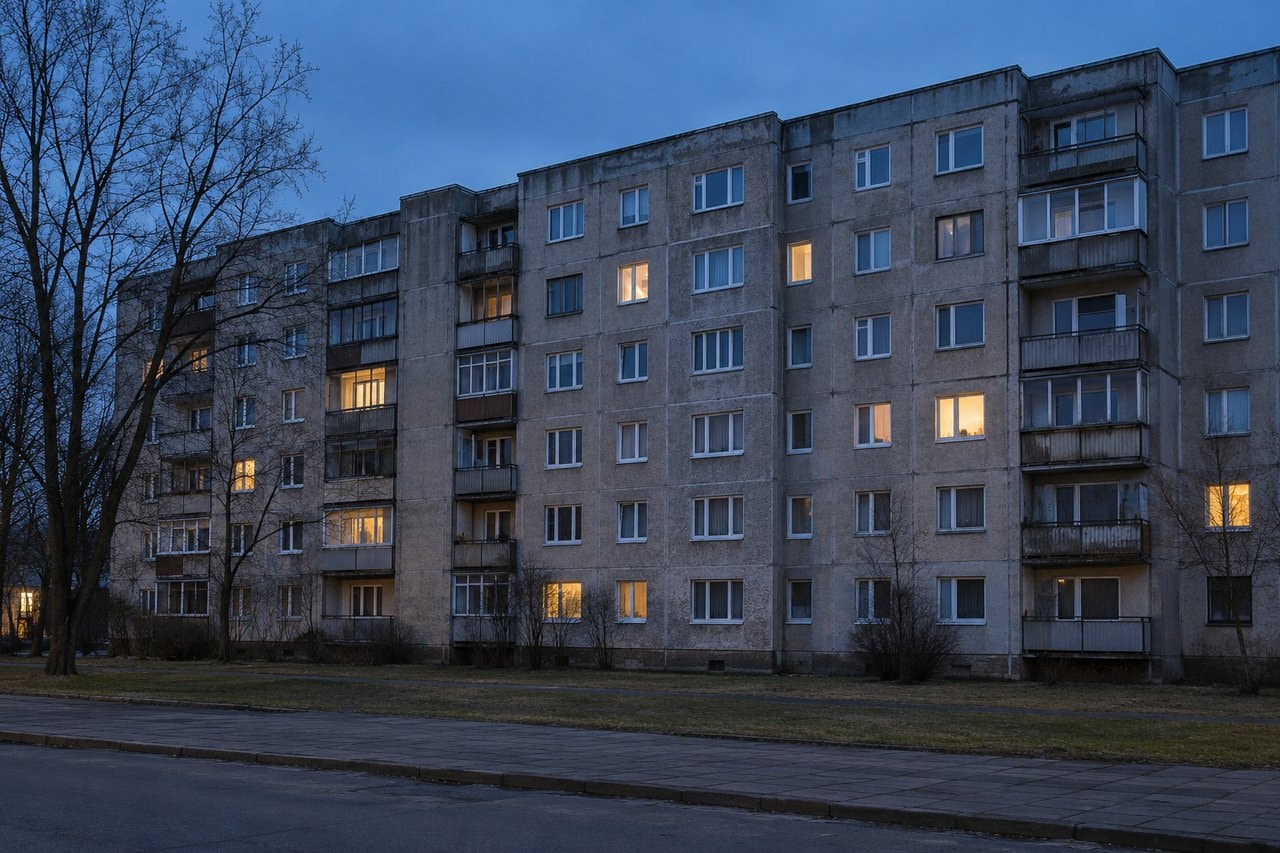
From monarchy to a party-dominated republic
The Wikipedia article on the Socialist Republic of Romania describes a communist state lasting from 1947 to 1989, called the Romanian People’s Republic from 1947 to 1965. Soviet occupation helped create the conditions for a pro-Soviet government and the exclusion of prewar political leaders. The monarchy’s abolition marked a change in the form of the state. The Romanian Communist Party’s dominant position was written into the constitutional order, so the republic’s institutions cannot be understood as an ordinary framework of competing parties and freely contested authority.
State names are useful markers, but a change in name does not by itself explain the exercise of power. The constitution, the party leadership and the police apparatus need to be considered together. Economic resources were also shaped by the aftermath of war and by the Soviet Union’s control over important sources of income. Later changes in foreign relations did not remove the domestic system of party control. The distinction between international autonomy and personal or political freedom is necessary throughout this chapter.
Gheorghiu-Dej and the consolidation of rule
Gheorghe Gheorghiu-Dej led communist Romania from 1947 to 1965 and died in 1965, as the Wikipedia article on Gheorghiu-Dej records. His leadership was involved in pressure on the monarchy and the establishment of communist government. Romania was initially a closely aligned Soviet satellite, while later relations included efforts to expand trade with Western countries. The source also records human rights violations under his government. A change in foreign policy should not be taken to mean an end to coercion at home or freedom for people treated as political enemies.
The consolidation of power operated through institutions as well as through the leader’s position. Political opponents were removed from public life, and the authorities developed an extensive system for controlling dissent. Agriculture became a major field of intervention. Villagers faced changes not only to the land they worked but also to the organisation of labour and the social relationships through which they had obtained access to it. The history of the countryside therefore belongs alongside the account of the party and the central government.
Collectivisation and the countryside
Agricultural collectivisation was launched in 1949 and its completion announced in 1962, according to the Wikipedia article on collectivisation in Romania. It aimed to change property arrangements and the organisation of agricultural labour through collective and state farming structures. The party used propaganda and campaigns of persuasion, while the process also involved intimidation, arrests and violence. Calling it an agricultural policy should not obscure those means. The programme affected people’s ability to control land and work, and challenged existing village hierarchies and relationships.
Collectivisation proceeded unevenly and was later accelerated. The source distinguishes the Romanian process from the Soviet model, without presenting its violence as harmless or incidental. Local party representatives carried out pressure in villages, while central decisions set the direction of the programme. This combination of central policy and local enforcement is important to reading the subject. It avoids treating coercion as merely the conduct of isolated officials, and also avoids assuming that every village experienced the policy through an identical local sequence.
The Securitate and political surveillance
The Wikipedia article on the Securitate identifies it as the communist state’s secret police. Its establishment involved Soviet help and direction. The force became a central instrument of surveillance and repression, with agents and informants operating within Romanian society. Its formal language of security did not make its conduct neutral. Political disagreement could be treated as a threat to the regime, and the apparatus helped suppress dissent. Institutional history must therefore describe what the secret police did, rather than simply repeat the protective purpose claimed for it.
Surveillance and imprisonment were connected forms of control. The authorities’ ability to gather information about people and to restrict their lives shaped the possibilities for opposition. The account should distinguish the agency’s organisation from the experience of those subjected to it, while keeping the relationship between them visible. A list of departmental names or staff totals would not explain that relationship on its own. The examples of political prisons below show another part of the same system of coercion, without turning the suffering of prisoners into spectacle.
Sighet and Pitești
The Wikipedia article on Sighet Prison records its use for political prisoners, including former politicians and Greek Catholic clergy. Many detainees were held on orders from the authorities without charges or a public trial. Prisoners died there, and secrecy surrounded the handling of those deaths. These facts are sufficient to identify the character of the repression without reproducing details of imprisonment or death. The site is now part of a memorial, which gives the place a role in the study and remembrance of communist rule.
The Wikipedia article on Pitești Prison places the violent reeducation experiment between December 1949 and September 1951. Prisoners carried it out under the guidance of the prison administration, with the aim of forcing political prisoners to abandon convictions and obey the authorities. The regime’s responsibility should remain clear when the involvement of prisoners is described. Their earlier beliefs do not excuse the violence inflicted on them. The later trials did not impose equivalent consequences on participating prisoners and prison officials, according to the account.
The Memorial to the Victims of Communism and to the Resistance at Sighet has a museum and a centre of study, and its own pages identify oral history and research among its activities. They also describe a summer school. These institutional functions provide ways to study the period through documents, testimony and exhibitions. The memorial should be named as a source of historical work, without implying a relationship with this guide or turning the discussion into visitor logistics. Its pages can be consulted for its own account of its work.
Ceaușescu, austerity and the end of the regime
Nicolae Ceaușescu led the Romanian Communist Party from 1965 until his overthrow and execution in December 1989, as the Wikipedia article on Ceaușescu states. A brief easing of censorship early in his rule gave way to intensified repression. Surveillance, control of the press and a growing cult of personality formed part of the later regime. Large foreign debts were followed by austerity intended to repay them. The resulting shortages and worsening conditions contributed to public discontent. The account of these policies must remain connected to the authorities that imposed them.
The Wikipedia article on the Romanian revolution describes violent unrest in December 1989, beginning in Timișoara and spreading across the country, with over one thousand deaths according to its estimates. Protests reached Bucharest, the leadership fled, and communist rule ended. The violence and the rapid sequence of military and political changes should be described without invented certainty about every disputed act. The page on constitutions, Europe and NATO explains the later framework of government and international relationships rather than treating the revolution as the end of all political change.
Following the records beyond the political outline
The Wilson Center’s History and Public Policy Program presents work on Cold War history through materials from different sides of the conflict, including declassified documents and historical publications. It is a useful example of how the international setting can be studied alongside domestic institutions and experiences. The journals and research centres page introduces other places where scholarship appears. The student research guide explains how to keep a question, a source’s scope and the limits of its evidence connected when writing about the period.